






















LG Dishwasher Parts
- Search your model number to find:
- Genuine OEM parts guaranteed to fit
- Free manuals and guides
- Repair instructions and videos

Popular LG Dishwasher Parts
Your Price
$8.79
In Stock
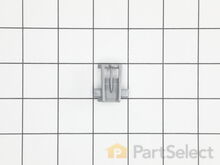
LG Dishwasher HOLDER
PartSelect Number PS12081829
Manufacturer Part Number MEG64438801
This holder, also known as a mounting bracket, is responsible for securing the dish rack in place inside your dishwasher during cleaning. It is a genuine OEM replacement part sourced directly from LG to ensure a perfect fit for your dishwasher. It is gray in color and measures 1 inch by 1 inch. If the holder is lost or broken, your dish racks may become dislodged or unstable and cause damage inside the dishwasher. Each holder is sold individually.
Installation Instructions
Gregory from YONKERS, NY
to change the clip that holds the the upper rack the whole rail must be changed
you need to carefully apply a little pressure to the rail moving it back towards the back of the tub, this will let it unhook from the tub, then just slide the new rail into place.
Read more...

Your Price
$9.31
In Stock
LG Dishwasher ROLLER ASSEMBLY
PartSelect Number PS12075858
Manufacturer Part Number 4581DD3003C
The dishwasher roller assembly connects to the dishrack, and is located in the lower level of the dishwasher. It allows the dishrack to easily slide in and out. If the lower rack keeps falling off the track in your dishwasher, makes noises, the door will not close, or the dishes are not getting clean, then it is best to replace it for more security. A flat blade screw driver is the only tool needed for this installation. Open the lower dishwasher rack and remove retaining tabs from both ends of the rack and slide it out. Locate the older roll assembly, remove it and replace the rollers. Remember to put the tabs on each side back before sliding it back in. Make sure the dishwasher is off before starting this installation project.
Installation Instructions
Lenny from KIRTLAND, OH
Second roller in on the left side was missing don't ask my how, pulling the bottom rack out the rack would dip down i had to lift it up to pull it the rest of the way out.
Ordered the roller from Parts Select, slid the roller over the little spindle sticking out of the bottom rack and snapped it in place. Job done in less than one minute.
Read more...

Your Price
$17.90
In Stock
LG Dishwasher Hinge Cable
PartSelect Number PS3524406
Manufacturer Part Number 4933DD3001B
This dishwasher door hinge cable assembly connects the door to the spring. The door hinge cable and the door spring apply tension to the door to prevent it from dropping open too quickly. This part contains two plastic pieces which are approximately 2 inches in length by 3/4-inch in width, as well as a rope portion that measures approximately 8 inches in length. When beginning this repair, be sure to use caution when replacing the door hinge cable. The spring to which the door hinge cable attaches is under tension and could snap. This part is sold individually.
Fixes these symptoms
- Door latch failure
- Door won’t close
- See more...
Installation Instructions
Charles from DENNIS, MA
Dishwasher door became heavy and would fall to the floor if you didn't hold it up.
Removed mounting screws from sides of disher. Removed broken piece of connector assy still attached to hinge. Attached new connector assy to hinge then looped it around pulley with spring attached to opposite end. Need both hands to pull spring up to side of tub and connect it. I would suggest replacing both connector assemblies while you have the dishwasher pulled out. Push dishwasher back in and mount with screws.
Read more...

Your Price
$8.79
In Stock
LG Dishwasher HOLDER
PartSelect Number PS12081830
Manufacturer Part Number MEG64438901
This is a dishrack holder designed for various models of LG dishwashers. The purpose of this holder is to secure various parts within the dishwasher, such as the cutlery basket. This holder measures approximately 1 inch long and 0.4 inches wide, is made of plastic, and features two hooks that attach themselves to the frame of the rack. This genuine OEM holder comes as an individual part, so if you require multiple holders, consider that before ordering.

Your Price
$89.47
In Stock
LG Dishwasher High Limit Thermostat and Thermistor Kit
PartSelect Number PS16878105
Manufacturer Part Number AGM30045804
This dryer thermistor temperature sensor helps monitor and regulate the temperature inside a dryer. This part includes the wire harness. If your dryer overheats, does not produce enough heat, or takes too long to dry, then the thermistor might be defective or damaged. This can cause a fault code and could begin either prolonging or shortening drying time. As a safety precaution, make sure to unplug the dryer from the power source before beginning this installation, and wear gloves to protect your hands. Refer to the installation instructions provided by the manufacturer for further guidance.
Fixes these symptoms
- Not Heating
- See more...
Installation Instructions
Sheryl from SPRINGFIELD, MO
Dryer not heating
I followed video instruction in disassembling and set screws from each section into diferent small bowls in the order they were removed. Hardest part was some of the screws were really hard to get loose without stripping them and my control panel did not match video but I figured it out. Replacing the parts were easy and putting it back together. While it was apart I cleaned everything including fan blower wheel. Thanks for the right parts and your online video. With your help and a prayer this 62 year old woman fixed the problem and dryer runs like new.
Read more...

Your Price
$17.40
In Stock
LG Dishwasher Spring,Hinge
PartSelect Number PS3524564
Manufacturer Part Number 4970ED4004G
The door spring, used in dishwashers, adds tension to the door through the door hinge to keep it from opening too fast. If you have a door latch failure or your washer door drops too quickly when opened, it is best you replace this part to fix the problem. Refer to the manual provided by the manufacturer for installation instructions and further repair guidance. Unplug your dishwasher from the power source before you begin this repair project as a safety precaution.
Fixes these symptoms
- Door latch failure
- Door won’t close
- See more...
Installation Instructions
Gregory L from INDEPENDENCE, OH
Broken door spring allows the door to overextend to the floor if not propped.
Simple, removed screws securing machine in the cabinet, then pull the unit out of the cabinet space about 10 inches. Springs are accessible within this extension. You need strong hands to extend the springs and attach them. Once attached, push machine back in place and re-install the anchor screws. In my situation, only one spring was broken, so the attached side revealed the correct slot to place the hook on the top position, the bottom position has a plastic lead for the spring, and that lead is attached to a rope to the door hinge. Note: Replace BOTH springs, even if only one is broken.
Read more...

Your Price
$41.72
In Stock
LG Dishwasher NOZZLE ASSEMBLY
PartSelect Number PS7788355
Manufacturer Part Number AGB73093001
This nozzle assembly, commonly referred to as a sprayer head or spray arm, is an authentic replacement part supplied directly by LG for use in LG dishwashers. The nozzle assembly can be found at the bottom of the dishwasher tub. It is responsible for spraying water onto the dishes and utensils inside the dishwasher using a series of nozzles that release pressure water. Over time, the sprayer head may become clogged due to a build of debris and soap residue, or it may also be damaged by a falling item. If the sprayer head is faulty, you will likely notice that your dishes are not cleaned properly after a cycle, and they have spots of leftover soap residue. It is important to replace the sprayer head to keep your dishwasher running efficiently.
Fixes these symptoms
- Not cleaning dishes properly
- See more...

Your Price
$53.41
In Stock
LG Dishwasher Door Gasket - Black
PartSelect Number PS3522654
Manufacturer Part Number 3920DD3005A
This is a door gasket for a dishwasher. It creates a watertight seal between the dishwasher door and tub to prevent leaking while the appliance is in use. The gasket is approximately 76 inches long and is black in color. The gasket could become dry and brittle over time which can cause a leak, forcing you to replace it. After removing the old door gasket, clean the empty crevice to ensure a proper seal when you install the replacement gasket. To install the replacement gasket after cleaning the area, simply push the new part into place around the door.
Fixes these symptoms
- Leaking
- See more...
Installation Instructions
Bruce from Katy, TX
Dishwasher leaking; got AE error almost every other wash
The inside gasket deteriorates over time - However replacement is easy. the main thing you have to remember is after you remove the old gasket, install the new one starting at the middle top of the tub and work your way down both sides. Also, don't push the gasket all the way in...only enough to hold in place. When you close the door the gasket will form a better seal around the door.
Read more...

Your Price
$68.23
In Stock
LG Dishwasher HOSE ASSY, DRAIN
PartSelect Number PS16621806
Manufacturer Part Number AEM74333104
This LG drain hose assembly is a genuine OEM replacement that is compatible with various LG washers. The assembly includes the hose and plastic connectors. The flexible rubber hose transports used water from the washer tub out into a dedicated drainage system such as a laundry sink or standpipe. The drain hose may become clogged, dislodged, or damaged by loose items like coins in the laundry or by hard impacts from outside. If the hose is faulty, you will likely notice standing water in the washer tub after a cycle, mold growth, leaking, or water overflow. It is recommended to replace the drain hose promptly if it is faulty to ensure the proper functioning of your washer.
Fixes these symptoms
- Leaking
- See more...

Your Price
$11.76
In Stock
LG Dishwasher Roller with Axle
PartSelect Number PS3523050
Manufacturer Part Number 4581DD3002A
The rack roller and axle in your dishwasher allows the dish rack to slide in and out effectively.If you notice that your dish rack is not performing this function, or if one or more of your rack rollers are damaged, you should consider replacing it. The roller attaches to the dish rack with the axle, both are included in this part. This part is gray in color, and measures 1 inch in diameter. With the axle, this part is approximately 1-1/2 inches wide. To access the rack roller and axle, you will need to remove the top dish rack from your dishwasher.
LG Dishwasher Appliance Types
Related LG Dishwasher Parts
- LG Dishwasher Seals and Gaskets
- LG Dishwasher Racks
- LG Dishwasher Hoses and Tubes
- LG Dishwasher Dishracks
- LG Dishwasher Pumps
- LG Dishwasher Handles
Popular LG Dishwasher Models
Below are the most popular LG Dishwasher models we have. Enter your model number in the search box to find your model.
- LDF7774ST DISHWASHER
- LDF7774ST Smart Wi-Fi Dishwasher With Quadwash
- LDF6920ST Fully Integrated Dishwasher With Hidden Controls
- LDF6920ST DISHWASHER
- LDF6920ST
- LDF5545ST Full Console Built-In Dishwasher Stainless
- LDF5545ST DISHWASHER
- LDF7551ST
- LDS4821ST
- LDS4821ST DISHWASHER
- LDS4821ST Semi-Integrated Dishwasher With Digital Status Display
- LDS5540ST DISHWASHER
- LDS5540ST 24-Inch Built-In Dishwasher
- LDS5040ST Front Control Dishwasher With Flexible Easyrack System
- LDS5040ST DISHWASHER
- LDS5040ST Lg Lds5040st/00 Dishwasher
- LDF7932ST
- LDF7932ST DISHWASHER
- LDF8874ST Dishwasher
- LDF8874ST DISHWASHER